Growing Up in a Digital Africa: Protecting Children Online
Growing Up in a Digital Africa: Protecting Children in the Online World
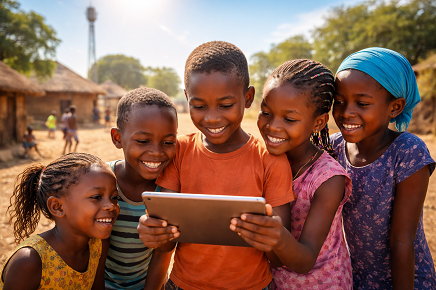
In today’s rapidly evolving world, childhood in Africa is no longer defined only by physical communities, classrooms, and playgrounds. Increasingly, it is shaped by smartphones, social media, online games, and digital learning platforms. Across the continent, millions of children are coming online for the first time—often through mobile devices—making Africa one of the fastest-growing digital regions globally.
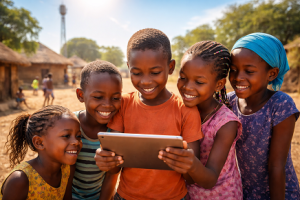
This transformation presents a powerful opportunity. The internet opens doors to education, creativity, entrepreneurship, and global connection. However, it also introduces serious risks that demand urgent attention. As Africa’s digital future expands, protecting children in the online world has become one of the most important challenges of our time.
Growing Up in a Digital Africa: The Rise of Digital Childhood in Africa
Africa is home to the youngest population in the world, with a large percentage under the age of 18. At the same time, internet access is growing quickly, with more young people gaining connectivity every day.
For many African children, the internet is a gateway to knowledge. Students can access online lessons, watch educational videos, and develop digital skills that prepare them for the modern workforce. Initiatives across countries like Nigeria, Kenya, and Ghana are actively promoting digital literacy among young learners.
Yet, this digital growth is happening faster than safety systems can keep up. Many children go online without guidance, awareness, or protection tools. This creates a gap between access and safety—one that leaves children vulnerable.
Growing Up in a Digital Africa: The Hidden Dangers Online
While the internet offers countless benefits, it also exposes children to a wide range of risks. These include:
- Cyberbullying and Online Harassment
Children can face bullying through social media, messaging apps, and online forums. Unlike traditional bullying, online harassment can happen 24/7 and reach a wide audience, causing emotional distress and long-term psychological harm. - Exposure to Harmful Content
Without proper filters, children may encounter violent, explicit, or misleading content. This can affect their mental health, behavior, and understanding of the world. - Online Exploitation and Grooming
Predators can use fake identities to manipulate or exploit children. This risk is particularly dangerous because many young users lack the experience to identify suspicious behavior. - Scams and Fraud
Studies among Nigerian adolescents show that many young people are exposed to online scams and inappropriate content, often without knowing how to respond effectively. (arXiv) - Digital Violence and Abuse
Across Africa, experts are raising alarms about increasing online abuse, including harassment, sextortion, and exploitation—especially affecting young girls and vulnerable groups.
These dangers highlight a critical reality: the online world is not automatically safe for children. It must be actively made safe.
Why African Children Are Especially Vulnerable
Several factors make children in Africa particularly at risk in the digital space:
- Limited Digital Literacy: Many children and even parents are not fully aware of online risks or how to manage them.
- Lack of Strong Regulations: Not all countries have comprehensive laws addressing online child protection.
- Mobile-First Access: Most children access the internet through smartphones, often without parental controls.
- Cultural and Social Gaps: Conversations about online safety, sexuality, and exploitation are sometimes avoided, leaving children uninformed.
Additionally, support systems such as reporting mechanisms, counseling services, and enforcement structures are still developing in many regions.
The Role of Parents and Guardians
Parents and caregivers play a crucial role in protecting children online. However, many adults are less digitally savvy than the children they supervise.
To bridge this gap, parents must:
- Engage in Open Conversations: Children should feel safe discussing their online experiences without fear of punishment.
- Set Boundaries: Establish rules for screen time, app usage, and online behavior.
- Use Parental Controls: Tools can help monitor activity and restrict harmful content.
- Educate Themselves: Understanding platforms and risks allows parents to guide effectively.
Research shows that parents are often the primary support system for children navigating online challenges, even though their level of involvement varies widely.
Schools and Digital Education
Schools are key players in shaping safe digital habits. Beyond teaching academic subjects, they must also focus on digital citizenship—helping students understand how to behave responsibly online.
Programs across Africa are already making progress. For example, initiatives aim to train hundreds of thousands of children, teachers, and parents in online safety and digital literacy skills.
Effective school-based strategies include:
- Teaching students how to identify fake news and scams
- Promoting respectful online communication
- Encouraging critical thinking about digital content
- Providing safe platforms for learning
When schools integrate digital safety into education, children become more confident and responsible users of technology.
Growing Up in a Digital Africa: Government and Policy Efforts
Governments and organizations are beginning to recognize the urgency of child online protection.
A major step forward is the creation of a continent-wide initiative led by global partners to strengthen digital safety for children. This effort aims to bring together governments, tech companies, and civil society to build safer online environments.
Policy efforts focus on:
- Developing cybercrime and child protection laws
- Improving reporting and response systems
- Holding technology platforms accountable
- Promoting child-friendly digital policies
However, more work is needed to ensure these policies are effectively implemented and enforced.
The Role of Technology Companies
Tech companies and social media platforms have a responsibility to create safer digital spaces. This includes:
- Stronger content moderation
- Child-friendly privacy settings
- AI tools to detect harmful behavior
- Easy reporting systems for abuse
Emerging technologies like artificial intelligence can also help identify harmful content and protect users, though they must be adapted to African languages and contexts to be effective.
Building a Safer Digital Future
Protecting children online in Africa requires a collective effort. No single group can solve the problem alone. Instead, it demands collaboration between:
- Families, who guide and support children
- Schools, which educate and empower
- Governments, which regulate and enforce
- Tech companies, which design safer platforms
- Communities, which create awareness
Most importantly, children themselves must be included in the conversation. They are not just users of technology—they are active participants in shaping the digital world.
Growing Up in a Digital Africa: Conclusion
Growing up in a digital Africa is both exciting and complex. The internet has the power to transform lives, offering children opportunities that previous generations could only imagine. But with this power comes responsibility.
If Africa is to fully benefit from its digital revolution, it must prioritize the safety and wellbeing of its youngest users. By investing in education, strengthening policies, empowering families, and improving technology, we can create an online environment where children are not only connected—but protected.
The future of Africa is digital. Ensuring that this future is safe for children is not optional—it is essential.